Ethiopian Christian Tours
About Ethiopia, a land steeped in rich history and diverse cultures, stands as one of the oldest Christian countries in the world. Its deep-rooted Christian faith and tradition have flourished for nearly two millennia, making it a cornerstone of early Christianity.
The introduction of Christianity to Ethiopia is believed to have occurred in the early fourth century. Specifically, it was during the reign of King Ezana of the Aksumite Empire that Christianity was adopted as the state religion. This monumental shift not only shaped the religious landscape of the nation but also had a lasting impact on its culture, art, and society. Today, the Ethiopian Orthodox Tewahedo Church, one of the oldest Christian denominations globally, continues to play a central role in the spiritual and daily lives of the Ethiopian people.
One of the most fascinating aspects of Ethiopia's Christian heritage lies in its long-standing connection to ancient texts, particularly the Bible. Unique to the Ethiopian tradition is the presence of the Ge'ez version of the Bible, which includes books that are not found in the standard biblical canon accepted by most Christian denominations around the world. Among these is the Book of Enoch, an ancient Jewish apocalyptic text that has captured the interest of scholars and religious leaders for centuries.
The Book of Enoch, attributed to the great-grandfather of Noah, presents a rich tapestry of themes ranging from angelology to eschatology. It provides insights into early Jewish thought and offers a glimpse into the spiritual milieu that existed at the time. In Ethiopia, this book is preserved in the Ethiopic Bible, showcasing the country's unique approach to religious texts and its commitment to preserving ancient writings. The preservation of such texts in Ethiopia emphasizes the nation's historical significance not just within Africa but in the broader context of Christian theology.
Ethiopia's identity as a cradle of Christianity is further illustrated by its numerous ancient churches, monasteries, and religious sites that dot the landscape, particularly in the northern regions. The rock-hewn churches of Lalibela, carved from solid rock in the 12th century, are a UNESCO World Heritage site and stand as a testament to the architectural and spiritual dedication of the Ethiopian people. These remarkable structures, along with many other religious sites, attract pilgrims and tourists alike, who come to witness the profound history and spirituality that pervades the land.
Moreover, the Ethiopian New Year, known as Enkutatash, falls on September 11 (or 12 in a leap year) and marks the commencement of the ecclesiastical year. This celebration, deeply intertwined with Christian traditions, showcases the festive spirit of the Ethiopian people and their reverence for their ancient Christian heritage. Colorful attire, joyous music, traditional foods, and communal prayers characterize this vibrant festival, illustrating the enduring vitality of Ethiopia’s Christian culture.
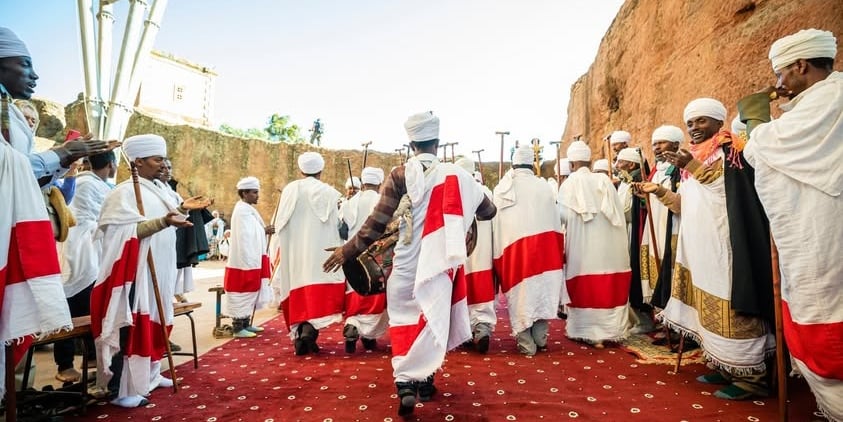
The significance of Ethiopia as an ancient Christian country is also observed in its unique and diverse Christian festivities, which blend indigenous customs with Christian beliefs. For instance, the Timkat festival, celebrating the Epiphany, includes elaborate processions of priests and the faithful, all participating in a joyful reenactment of the baptism of Jesus in the Jordan River. Such celebrations reflect the deep-rooted connection between Ethiopian culture and its Christian faith, serving as a living archive of its history.
In conclusion, Ethiopia is more than an ancient Christian nation; it is a tapestry of faith, history, and culture woven together through centuries of tradition. The presence of unique biblical texts like the Book of Enoch, coupled with its ancient churches and vibrant spiritual celebrations, attests to Ethiopia's invaluable contribution to the story of Christianity. As the country continues to evolve, its rich heritage remains a captivating focus for scholars, tourists, and those curious about the deep connections between faith and history.
You didn’t come this far to stop